Shoes multiply quickly. A few pairs for work, a pair for the gym, boots for winter and sandals for summer can fill a closet floor before anyone notices. Storing them well keeps the space tidy, protects the shoes from dust and crushing and makes it easier to find the right pair in a hurry. The best solution depends on how many pairs you own, how often you change them and how much floor space you have.
This guide compares the most common shoe storage options: freestanding racks, cubbies, under-bed bins and wall-mounted systems. It explains where each option works best, what to check before buying and how to store shoes so they last. It describes general features and does not recommend a particular brand.
A busy family keeps shoes piled by the door, and the floor is never clear. A low rack with a tray underneath solves the problem, and the entryway finally breathes.
Freestanding racks
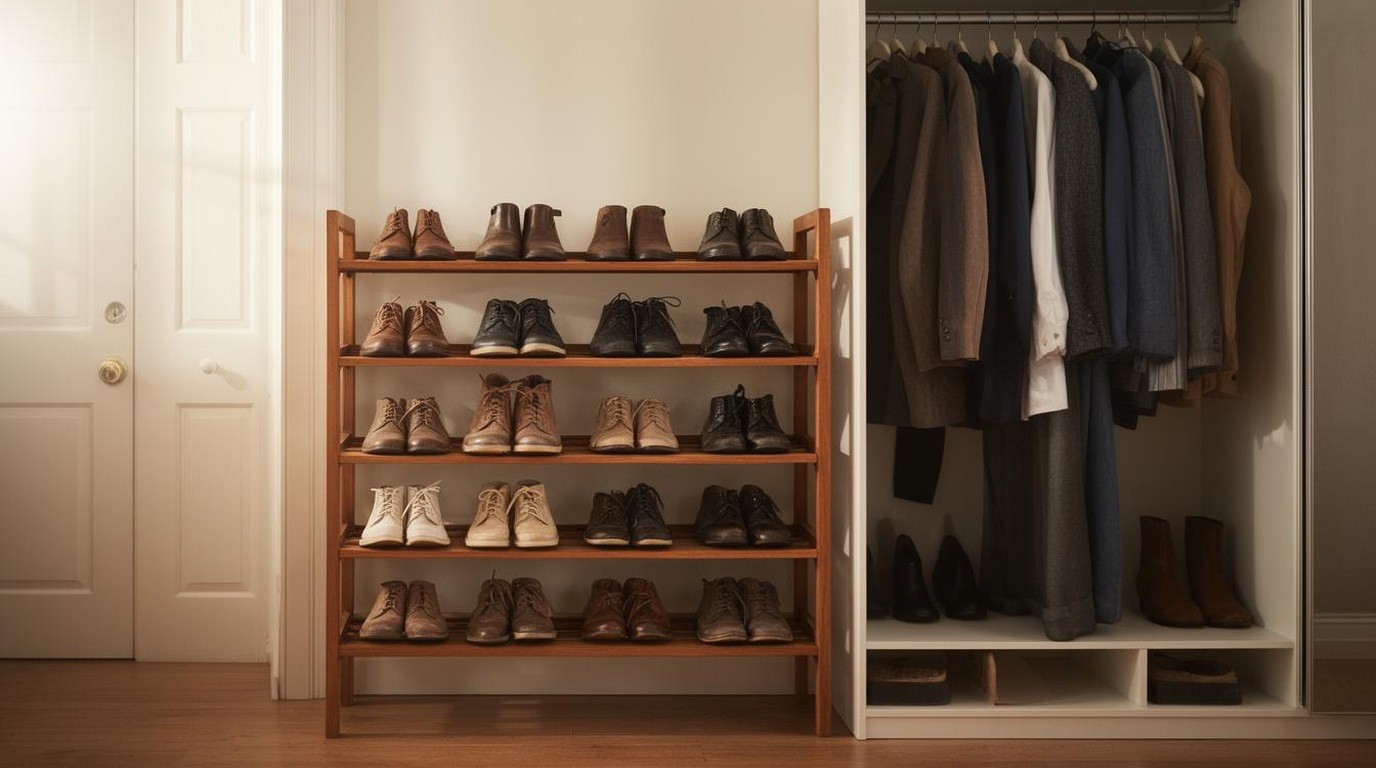
Freestanding racks sit on the floor and hold shoes in tiers. They are inexpensive, easy to move and simple to assemble. They suit closets with enough floor space and a varied collection of shoes, since each tier can hold a few pairs. The downside is that a rack can take up a large footprint and may be hard to access if it is packed tightly.
Look for a rack with a sturdy frame and slots that match the height of your shoes. Boots need taller slots, and a rack that is too short will force them to lean. Check the weight the rack can hold, especially if you plan to store heavier footwear.

Cubbies and shelving
Cubbies are openings in a shelf or a cabinet, each sized for one or two pairs. They keep shoes visible and allow each pair to have its own space. A cubby system works well for people who want to see every pair at a glance, and it can be built into a wall or sold as a freestanding unit.
Measure the cubby height and depth before buying. A cubby that is too shallow will not hold a boot, and one that is too deep may waste space. Consider whether you want open cubbies, which show the shoes, or closed ones, which hide dust and light.
Under-bed bins
Under-bed bins make use of space that is otherwise wasted. They are flat, sliding boxes or clear containers that fit beneath a bed, and they suit out-of-season shoes, formal footwear and pairs you wear less often. Check the height of the bed frame before buying, since many beds have less clearance than people expect.
Keep the bins labeled and closed to prevent dust from settling. Store only the shoes you do not need often, since bins under the bed are less convenient than a rack or cubby for daily use.
Wall-mounted systems
Wall-mounted racks and shelves save floor space, and they can be a good choice for narrow closets or entryways. They lift shoes off the floor, which makes cleaning easier. Make sure the fixings are suited to your wall, and that the shelf is strong enough for the weight of your shoes. Check for cables and pipes before drilling.
Wall systems suit people who own a small number of pairs. A large collection may need more capacity than a wall rack can offer.
| Option | Best for | Trade-off |
|---|---|---|
| Freestanding rack | Varied collections and easy setup | Large footprint |
| Cubbies | Seeing every pair at a glance | Requires built-in space or a larger unit |
| Under-bed bins | Out-of-season and formal shoes | Less convenient for daily use |
| Wall-mounted | Narrow closets and small collections | Limited capacity |
Care and storage habits
Shoes last longer when they are cleaned and dried before storage. Remove dirt and salt from winter boots, and allow damp shoes to air dry away from direct heat, since heat can crack leather and warp soles. Use shoe trees or stuffing to keep leather shapes, and store shoes in a dry, ventilated space to prevent odor and mildew.
Keep a few pairs in rotation so that each one has time to dry between wears. Rotating your shoes is a simple habit that extends their life.
Choosing the right option
Count the pairs you own and the ones you wear each week. A small collection can fit on a single rack or a wall unit, while a large collection may need a combination of cubbies and under-bed bins. Think about how you choose shoes in the morning, and place the everyday pairs at the front.
Our guide to closet rods, shelves and drawers covers the rest of the closet, and the decluttering method explains how to decide which pairs to keep before choosing storage for them.
Entryway placement and airflow
Shoes stored in an entryway pick up dirt, moisture and salt from outside. A rack that lets air circulate helps them dry, and a tray under each pair catches water. Keep entryway storage away from heaters and direct sun, since heat can crack leather. A small bench with a shoe rack beneath can keep the area tidy and give people a place to sit while they change.
Shoes for children
Children’s shoes change quickly as feet grow. Store outgrown pairs in a labeled bin, and check the size before passing them on. A low, open rack suits small hands, and a bin for sneakers keeps the floor clear. Check the storage each season, since children often need new shoes at the start of school and in the colder months.
Bottom line
Choose shoe storage by the number of pairs you own, the floor space you have and how often you wear each pair. Freestanding racks are flexible and affordable, cubbies show every pair, under-bed bins hide out-of-season shoes and wall systems save floor space. Clean and dry shoes before storing them, keep shoes in a ventilated space and rotate pairs so they last. A well-organized shoe area makes every morning easier.
Shoe storage mistakes
- Choosing shoe storage without measuring the tallest boot.
- Storing damp shoes in a closed bin.
- Leaving the entryway rack in direct sun.
- Buying a rack that is too small for the pairs you own.